
Spring flowers - can we eat them?
YES AND NO
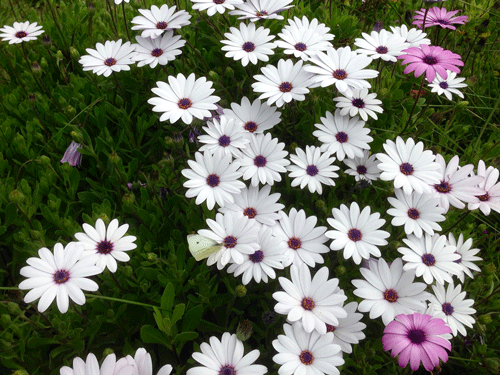
Yesterday was my Eltham walk day and it was a glorious day. Spring was in the air and there were flowers everywhere - even the first butterfly I have seen this year which you might just be able to see in the above picture. On my previous walk - a similar beautiful day - I had met a young man and his two young sons, who said that they were out for a flower picking walk. Which was a nice and odd little surprise. Along my walk I see every kind of flower - weeds - the oxalis and onion weed (more later) are flourishing, cultivated 'exotics' like camellias, proteas and things I don't even know the name of and Australian natives like banksia. Then there's the in-between things like the daisies shown above, which I'm sure were planted deliberately originally but which have now taken over. The garden in which the above flowers are growing is completely overgrown and untended but currently a riot of colour from these weedy kind of daisies. So I took some photos and tried to think how to put them in a food blog.
flowers-6 flowers-5 flowers-4 flowers-2
Because, generally speaking we don't eat flowers do we? We eat the products of flowers - seeds and their oil, and stamens, and the honey from the pollen, but generally not the flowers themselves. So I looked into it and here are a few things about eating flowers.
Cauliflower (note the name) and broccoli are technically flowers.
Zucchini flowers - these are pretty trendy - they stuff them and batter them, or bake them - well the Italians do - mind you they are pretty hard to find in the shops. You can find them in Italy too. I have had them, but I have to say they don't taste of much. It all depends on the stuffing.
Various flowers like nasturtium and marigolds can be added to salad mixes for colour and eaten. Not much of a mouthful though, and apparently you shouldn't eat too many of them. Some flowers are toxic.
Rose petals and lavender heads are often used to flavour things like a brilliant lavender crème brulée we had in France once. But I don't think one actually munches on them. They make rosewater out of roses too. But you do have to have the right kind of rose. I made a Jamie Oliver harissa once that had rose petals in it. There's orange flower water too.
I remember candied violets from my youth. I remember liking the taste - but I really haven't seen them since. I'm sure their time will come.
Some flowers can be infused in hot water and drunk as a tea - linden, borage, camomile ... but again apparently not too much.
Then there's onion weed - which is prolific at the moment and a true weed.

Though I think it is rather lovely - reminds me of snowdrops. However it does stink of onions and is pretty difficult to get rid of once you have it. If I see any in our garden I root it out straight away. So I checked it out - and indeed you can eat it - just treat it like you would spring onions or chives. They ought to market it! I wonder why they don't. Maybe it really doesn't taste as good as spring onions. Otherwise you would think they would have exploited it by now.
Then there's wine - David just reminded me of wine. You can make wine from flowers - I just had a quick look and found a website with a huge long list of flowers you can use for making wine. So why not try that?
Anyway - the answer to my question seems to be that yes you can eat flowers, though why would you? They give such immense pleasure as they are. And they are so tough. I took a picture of some growing through the stones. I have taken pictures of them in France growing out of castle walls, but can't find the pictures.

Flowers are beautiful and really should just be left to be flowers. Even the weeds.


Comments