
Green and gold wattles - food for the soul or the body?
It's cold, damp and miserable these days as winter comes to an end and moves into spring - usually the wettest season to my mind. But here in Australia, the trees mostly stay green and we have the benefit of the beautiful wattle trees with delicate but abundant flowers in every shade of yellow, from cream to almost orange. These two, which I photographed this morning are a cootamundra wattle (on the left) and acacia longifolia. Both of them are considered weeds by the purists because they are hardy and tend to take over and are not native to the area. I'm not quite sure how specific the area, but anyway they haven't exactly taken over my garden. And they are glorious. On a cold, overcast day like today they lift the heart. They are not the only kind of wattle in my garden, although I only have a tiny portion of Australia's supply - there are almost 1000 different kinds of wattle (or acacia) in this country - and we have two-thirds of the world's acacias. It is more Australian than the gum tree in some ways which is one of the reasons it has become Australia's national emblem (acacia pycnantha), and the colour our athletes wear. In fact there are so many acacias world-wide that the botanists (well some of them) are considering dividing them up and giving them a new name. The name wattle will survive though I'm sure. And where does it come from that name? Here is a much better and really quite interesting explanation than any I can compose from several sources:
"Wattle is the common Australian name for native trees and shrubs of the genus Acacia. The word is a transferred use of the general English ‘wattle’ (first recorded more than a thousand years ago), a name for pliable sticks or branches used in building fences, walls, and roofs. In the process of wattling the wattles are woven horizontally through upright posts— and in the construction method wattle and daub the posts and wattles are then plastered with mud or clay. The process of wattling was used by early settlers in the Australian colonies, who found the long, flexible branches of Acacia trees ideal for the purpose of building huts and fences. The settlers named the trees they used wattle trees or wattles, a change in meaning noted by this early writer: ‘Very many species of acacia are found in Australia…. Locally, they are known by the name of wattles, from the slender twigs being used for that purpose.’ (1829, R. Mudie, Picture of Australia)" Julia Robinson - Ozwords
wattle 4 wattle 1
If you are a gardener in Australia then you will have read that planting the right trees - and these include wattles, you will attract honey loving birds, one of which is even called a wattle bird. And there are lots of other honeyeaters. And they do cluster around wattle trees. So I naturally assumed that you could get honey from wattle trees. But no you can't. They produce pollen in vast quantities but no nectar, although their leaves exude a sticky liquid that is a bit honey like. And yes the bees love them too, but they are after the pollen not the nectar that makes honey. They need pollen for protein apparently at certain stages of their lifecycle. Yes you can find acacia honey on the web - but it's made overseas and not from a true acacia - just from a tree that must look a bit like an acacia. There is no wattle honey.
So can we derive any food from the wattle tree? Yes indeed we can, - from the seeds - and apparently it is now being grown commercially and sold for this purpose. You can get wattle seed in your local supermarket - either as itself or in other spice mixtures or in other products, such as cookies, granola, cereal bars, ice cream and bread. Chefs like it too. And, did you know, Qantas has been serving Anzac cookies spiced with wattle seed for absolutely ages?
anzac biscuit bread
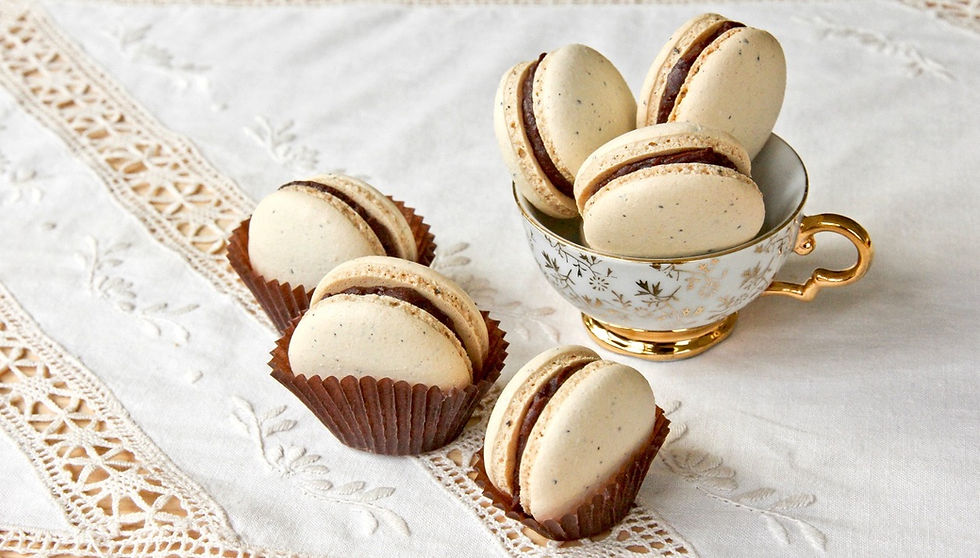
So what does it taste like? Well the most common words I found to describe it were coffee, chocolate and hazelnut - as here:
"The seeds are either picked and cooked in the pod while green and tender – the bush equivalent of garden peas – or roasted before being ground into a flour; the aroma a bit like a mildly roasted coffee, with notes of sweet spice, raisin, chocolate and hazelnuts." The Guardian
wattleseed wattlesed & powder
A word of caution here though. Of those almost 1000 different wattle trees, only 120 produce seeds that are good to eat. So I wouldn't just go out and harvest your wattle trees, without checking first, which ones are alright. But aren't they beautiful too, those seed pods? They cluster on the tree in long dangling pods, and eventually split and drop their seeds on the ground. But they probably won't germinate - they need heat (bush fires for example) to do that. (If you want to germinate some soak them in boiling water before planting.) So how my two beautiful trees are weeds I don't know. Obviously they don't require heat to germinate.
And yes, it seems you need to roast the seeds first too unless they are green - although they need to be cooked too.
So then I thought - seeds - so can't you make oil from it? Well yes, they are oily, but the only oil I found online was an Essential oil - not a cooking oil.
So in answer to my original question of food for the spirit or the stomach, as far as this stomach goes I guess the answer is food for the spirit. They really do lift the heart on a cold winter's day and promise that spring is almost here. From a distance they are a brilliant and joyful burst of gold in an otherwise gloomy landscape, and up close the delicacy of their fluffy little flowers is stunning. But I will give wattle seed a go sometime. Perhaps in some scones or muffins.
And did I say they are very nutritions and gluten free?



Comments